7 Biophilic Office Designs That Slash Stress
Discover seven science-backed biophilic office layouts that lower cortisol and boost creativity. See how living walls, daylight mimicry and natural textures transform sterile workspaces into calming productivity hubs.
Home Studios
February 23, 2026
7 Biophilic Office Designs That Slash Stress
Stress drains productivity and fuels burnout, yet many workplaces still feel sterile and exhausting. Forward thinking companies are turning to biophilic design, the practice of weaving nature into the built environment, to reverse that trend. Research from the Journal of Environmental Psychology shows that offices with natural elements can cut employee stress by up to 37 percent while boosting focus and creativity. Below are seven proven biophilic strategies that transform typical offices into calming, high performance habitats.
1. Preserved Moss Walls for Zero Maintenance Greenery
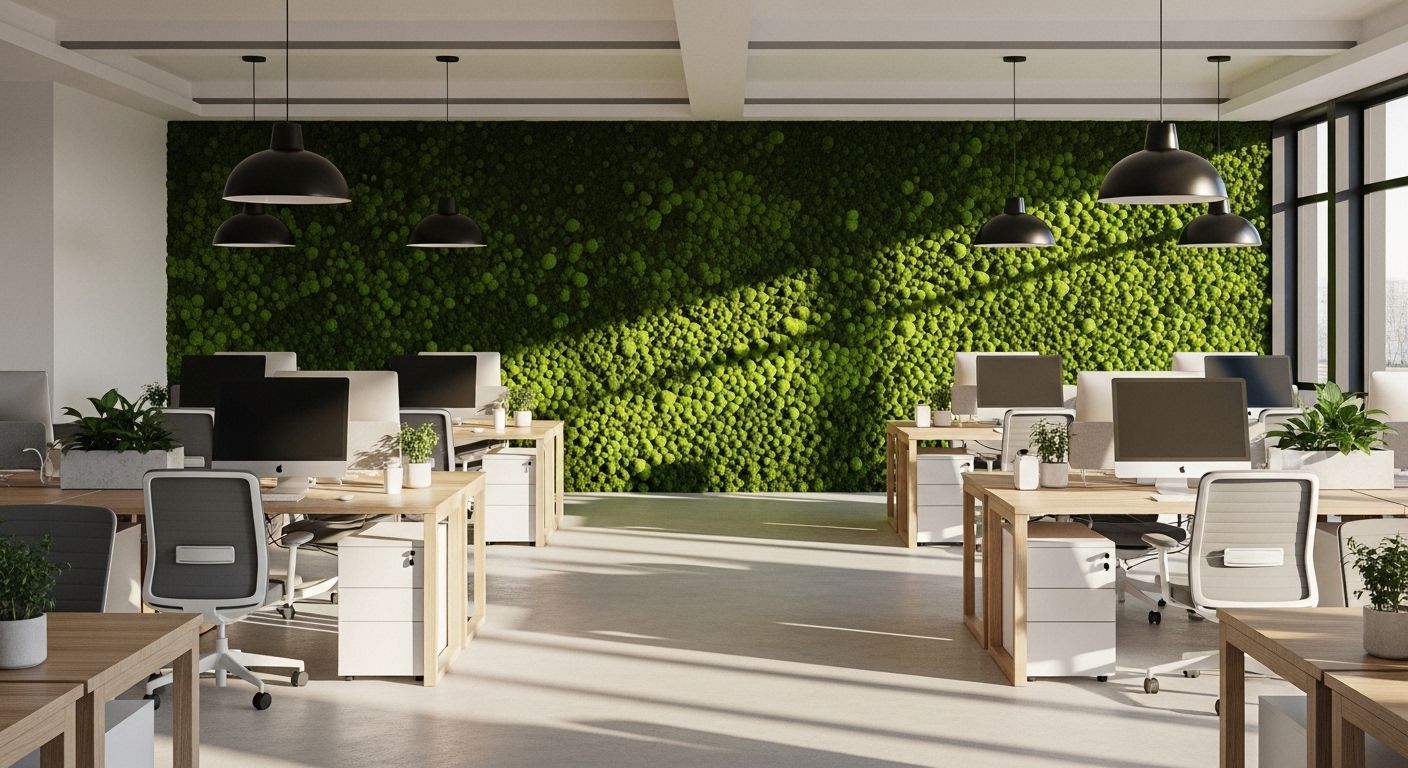
Live plant walls look spectacular, but they demand irrigation, grow lights, and ongoing trimming. Preserved reindeer moss offers the same lush texture without any upkeep. The moss is harvested sustainably, dyed with food grade pigments, then preserved so it remains soft and vibrant for years. Because it needs no soil or water, it can be mounted on acoustic panels, turning a blank wall into both a visual oasis and a sound buffer that lowers ambient noise by 30 percent. Position the installation behind reception desks or in open plan areas where first impressions and conversation clarity matter most.
2. Maximizing Natural Light with Plant Placement
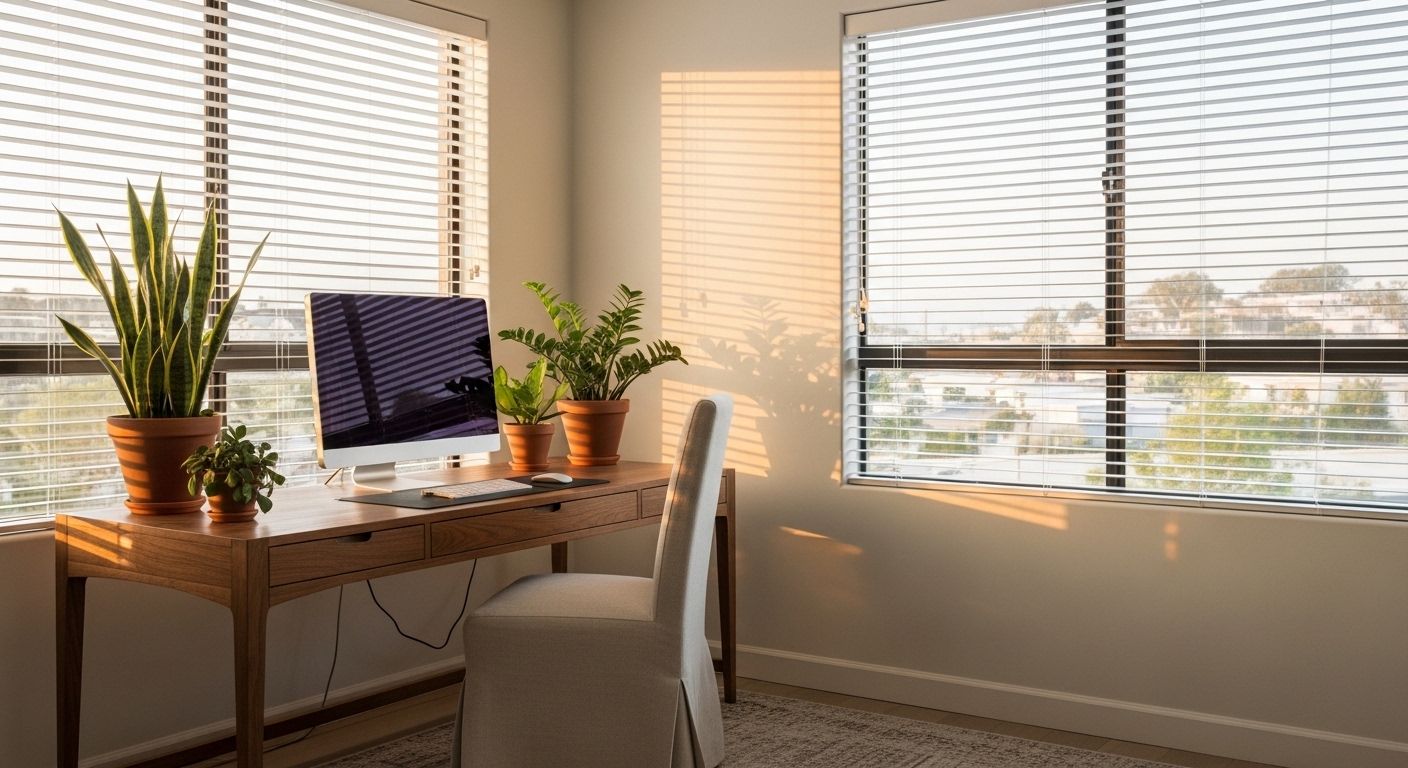
Daylight regulates circadian rhythms, improves mood, and reduces headaches, yet many workers sit more than 25 feet from the nearest window. Rather than blocking sunlight with bulky furniture, arrange low profile planters on sill ledges and beneath glass. Species such as snake plant, zz plant, and parlor palm tolerate indirect rays and filter volatile organic compounds from printer ozone. Use matte terracotta pots to prevent glare, and angle foliage so leaves scatter light upward, brightening ceilings and reducing the need for artificial fixtures during shoulder hours.
3. Central Tree Installations for Micro Parks Indoors
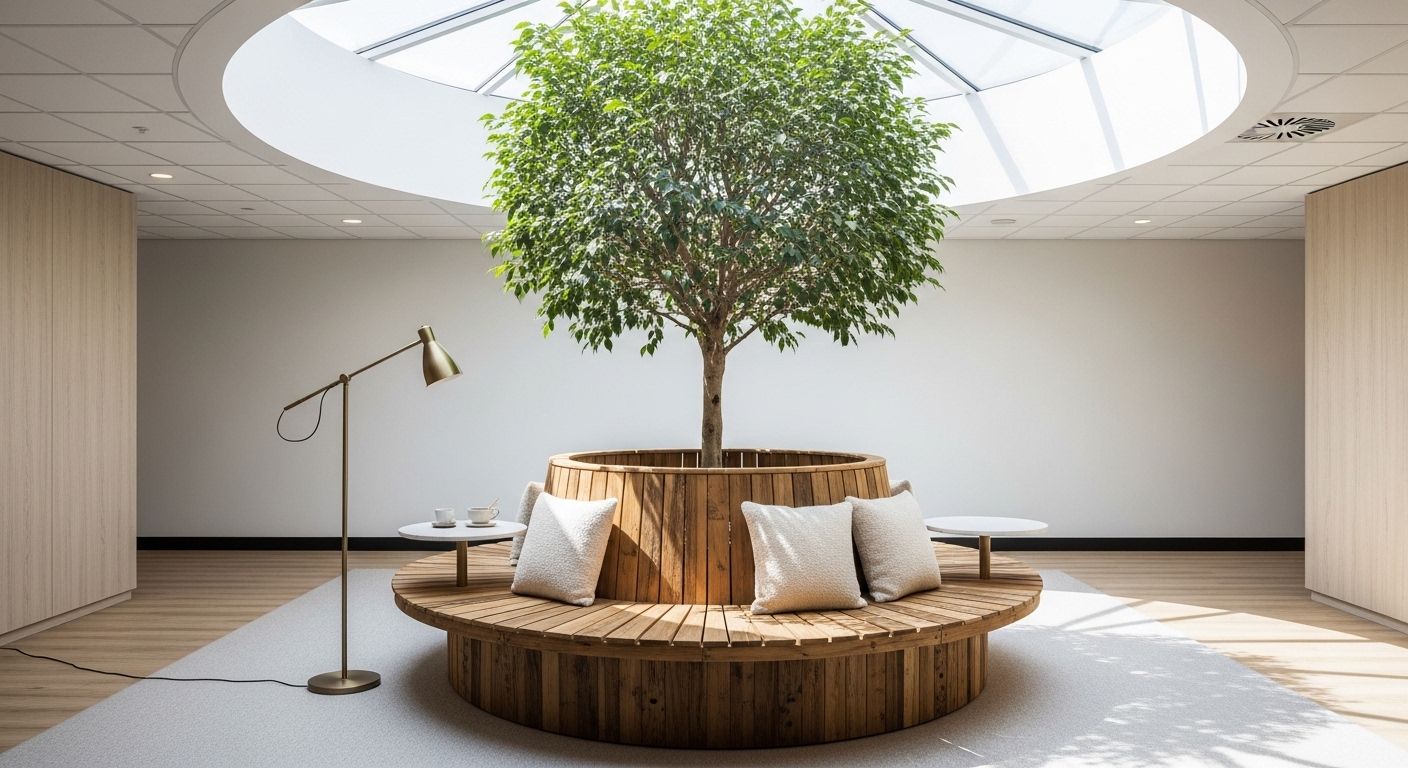
A single mature tree under a skylight becomes a landmark that encourages walking meetings and mental resets. Ficus, olive, and Japanese maple varieties adapt well to large containers with integrated irrigation. Ring the trunk with tiered seating made from FSC certified wood to create an informal amphitheater. Employees instinctively gravitate toward the spot for brainstorming sessions, phone calls, or quick breathers, increasing daily step counts and reducing sedentary fatigue. Aim for a canopy height of at least eight feet so sightlines remain open across the floorplate.
4. Color Psychology Through Living Greenery
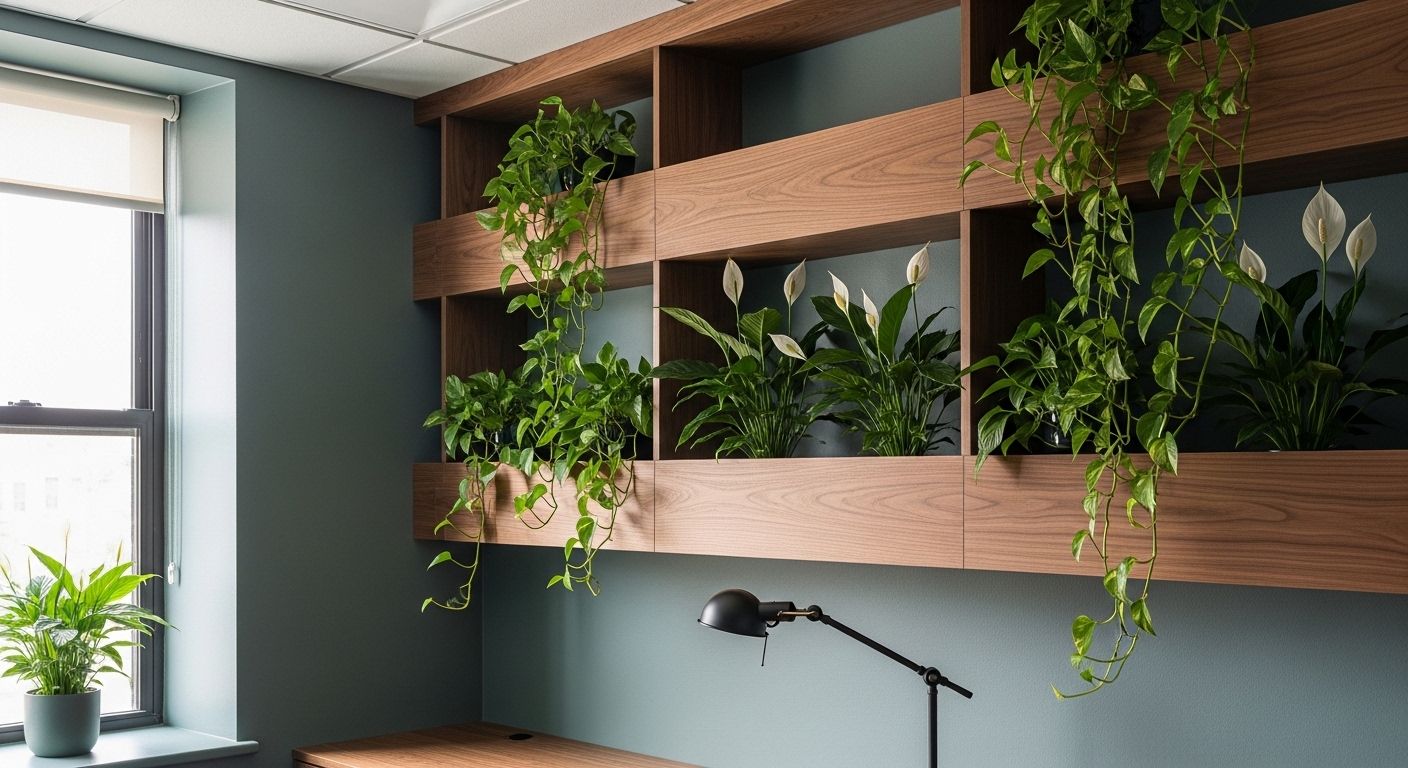
Color influences emotion faster than conscious thought. Pair slate or charcoal walls with cascading pothos, philodendron, or string of pearls to introduce verdant accents that trigger parasympathetic calm. The contrast between dark backgrounds and luminous foliage heightens perceived saturation, delivering the restorative benefits of a forest without busy patterns that can distract. For executive offices, limit the palette to two plant species and one pot color to maintain a minimalist, high authority aesthetic while still reaping stress lowering rewards.
5. Edible Green Walls for Fresh Snacks
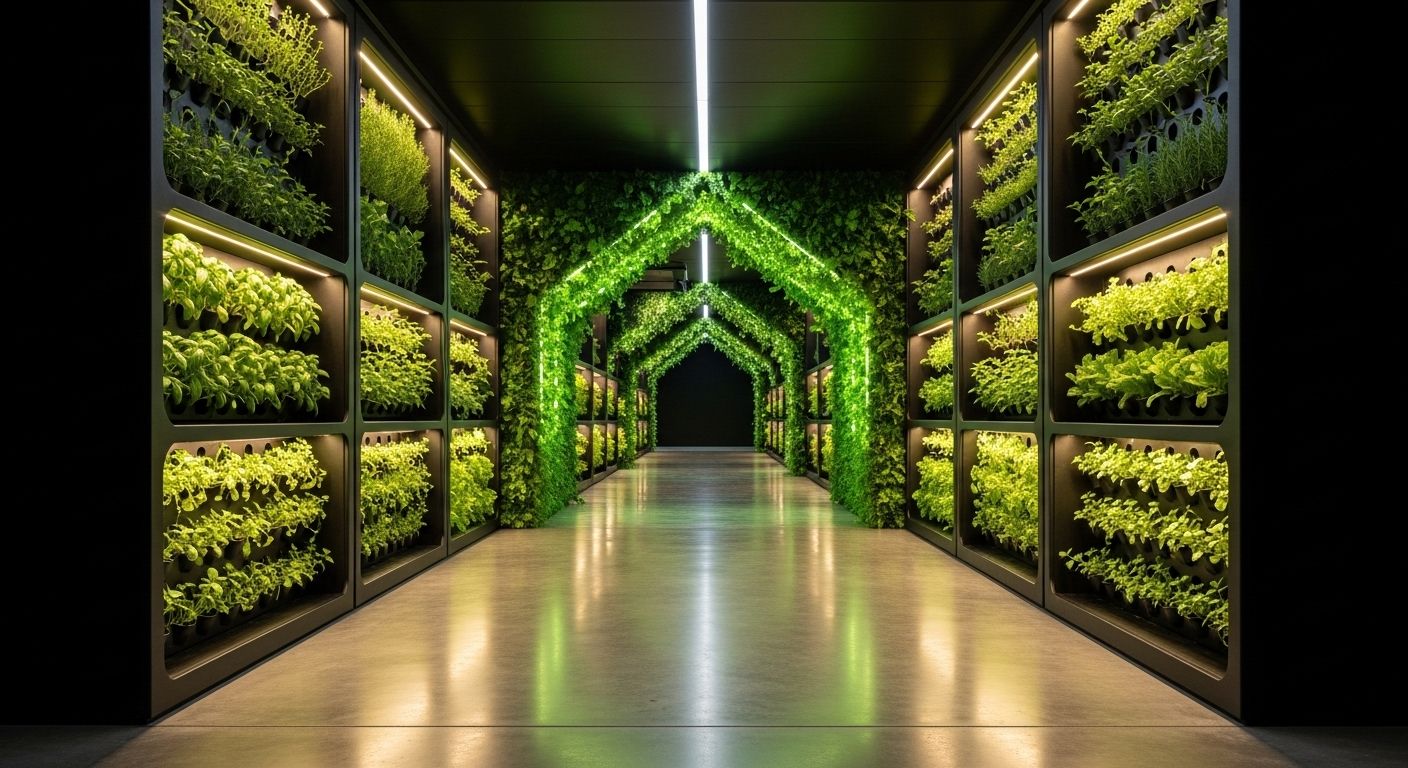
Hydroponic towers planted with lettuce, basil, and alpine strawberries turn break areas into living vending machines. Employees harvest ingredients for salads or herbal tea, creating micro moments of mindfulness that interrupt stress feedback loops. LED grow strips programmed for 6500 K daylight spectrum keep crops compact and flavorful while doubling as corridor nightlights. A single five foot tower can yield 30 heads of lettuce per month, offsetting catering costs and reinforcing corporate wellness narratives.
6. Water Features Combined with Greenery
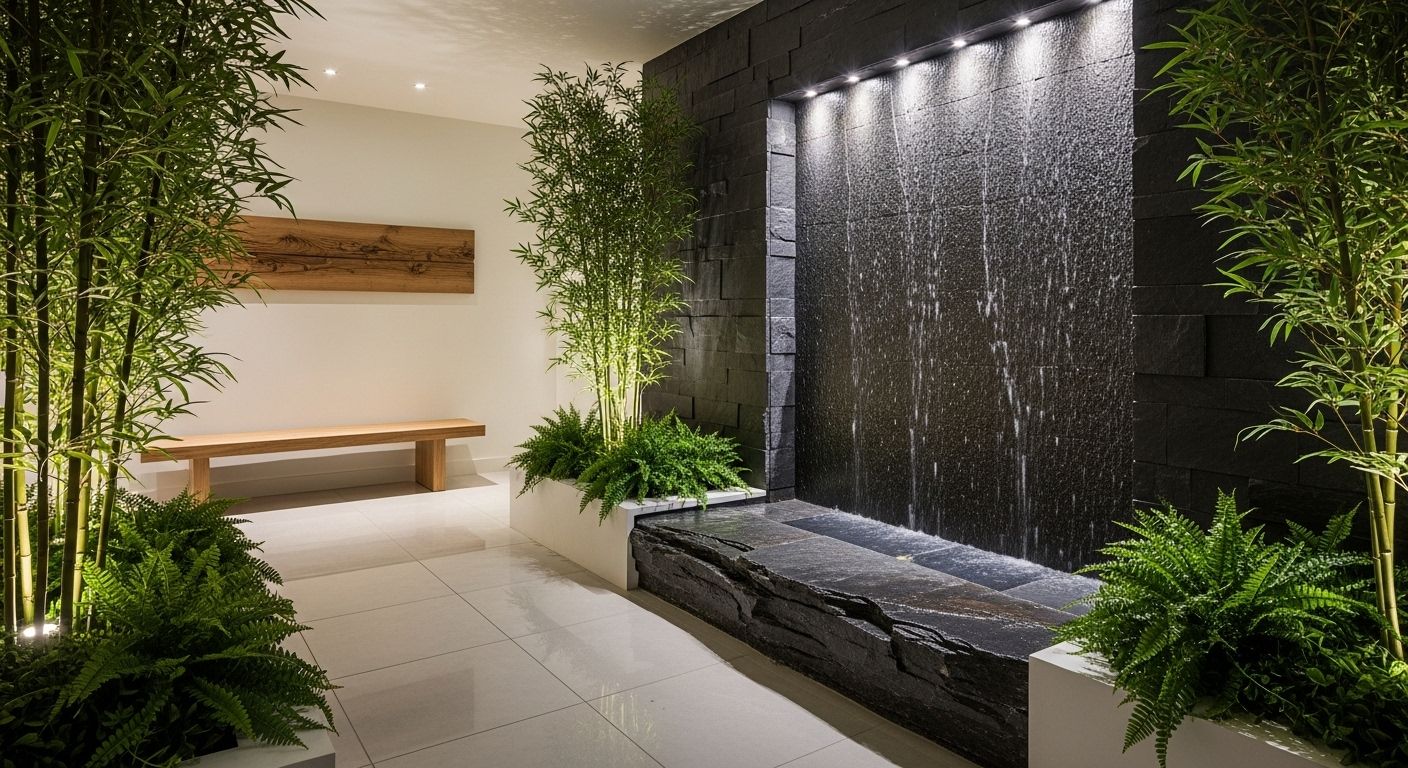
The sound of flowing water masks disruptive speech, lowering perceived stress hormones within minutes. A slate water wall planted at its base with dwarf bamboo or peace lilies amplifies the effect by reflecting rippling light onto foliage, creating dynamic shadows that capture peripheral vision. Choose a closed loop system with antimicrobial copper piping to avoid mineral buildup, and set the flow rate to 0.5 gallons per minute for a gentle trickle rather than a distracting splash.
7. Hanging Gardens for Dynamic Layers
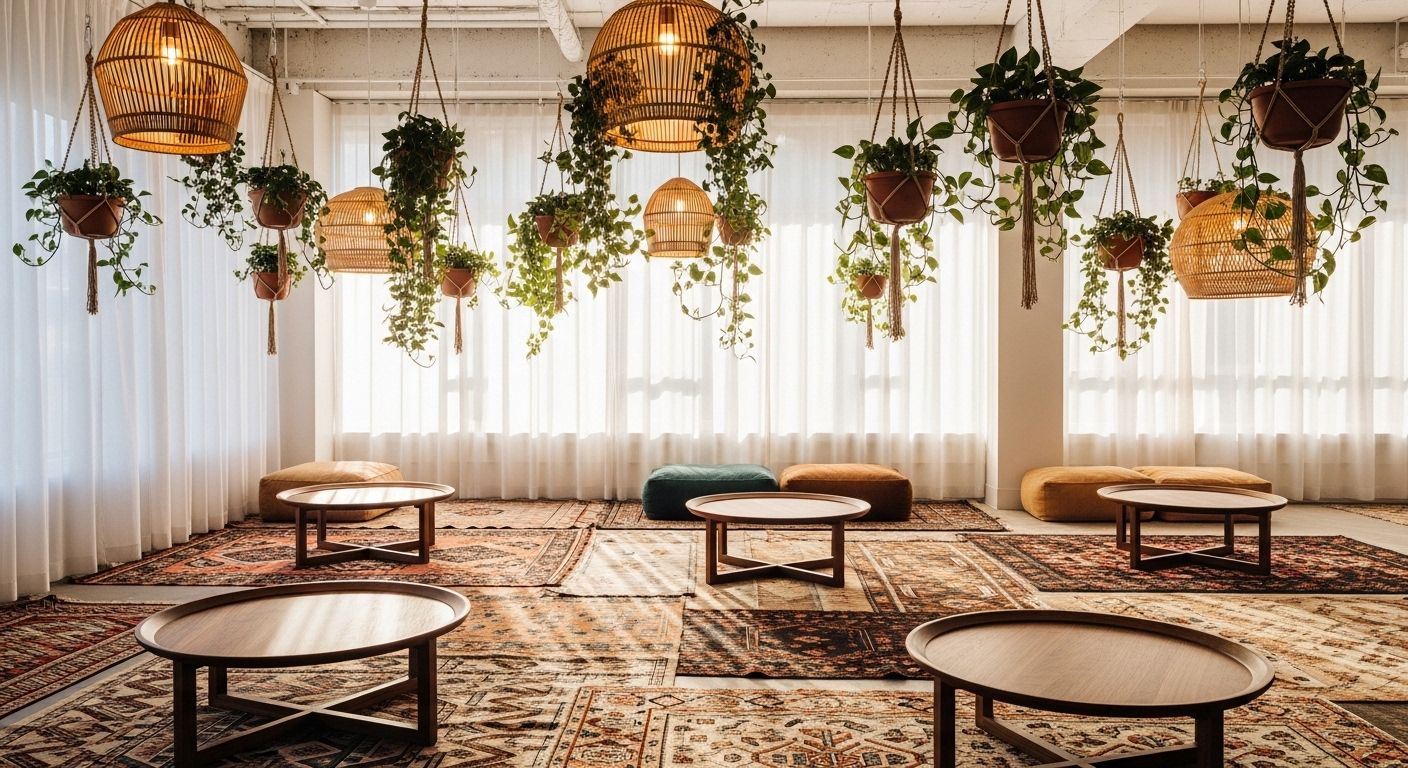
Ceiling mounted planters add drama without sacrificing floor area. Macramé or rattan holders staggered at multiple heights create a canopy effect that lowers perceived ceiling compression, making lounge zones feel intimate and secure. Trailing species like heartleaf philodendron or string of hearts draw the eye upward, encouraging slow diaphragmatic breathing associated with relaxation. Install retractable pulleys so maintenance crews can lower plants for pruning without ladders, keeping safety protocols intact.
8. Green Partitions for Privacy and Calm
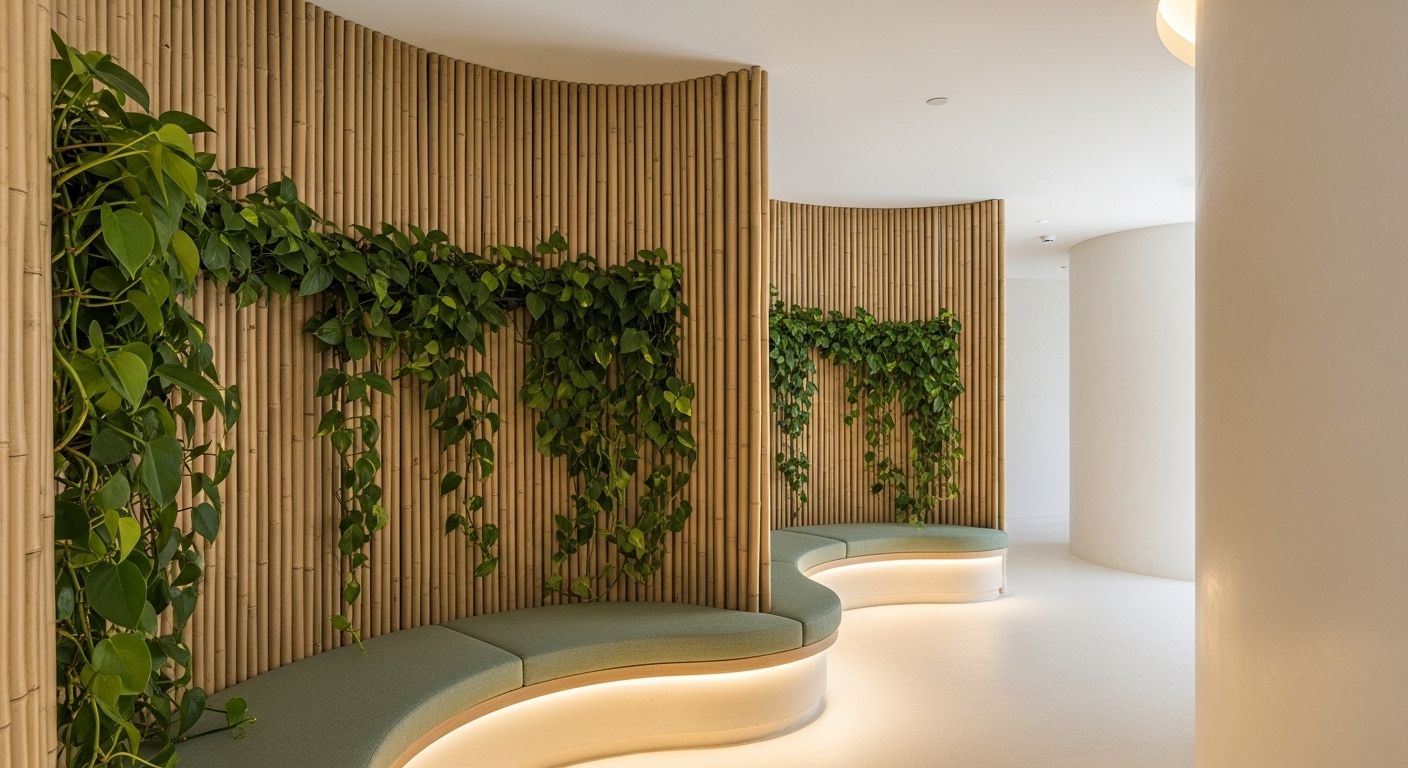
Open plans save space yet erode the sense of personal territory, raising cortisol levels. Mobile planters on casters planted with climbing fig or jasmine create soft partitions up to six feet high, defining quiet nooks without the rigidity of drywall. The curved silhouette of bamboo framed planters mimics natural shorelines, guiding foot traffic organically and reducing collision stress. Add a small side table and task light inside each alcove to signal that the space supports focused work, not just passage.
Conclusion: Nature as a Business Strategy
Biophilic design is no longer a decorative perk. It is a measurable investment in human capital. By integrating living walls, daylight optimization, and multisensory water features, companies report 15 percent higher productivity, 20 percent lower turnover, and a 30 percent reduction in sick days. Begin with one intervention, measure pulse rate variability or simple mood surveys, then scale the elements that deliver the clearest calm. The result is an office where stress wilts and innovation blooms.