Golden-Hour Marble & Teak: Designing a Luxe Restaurant Dining Room
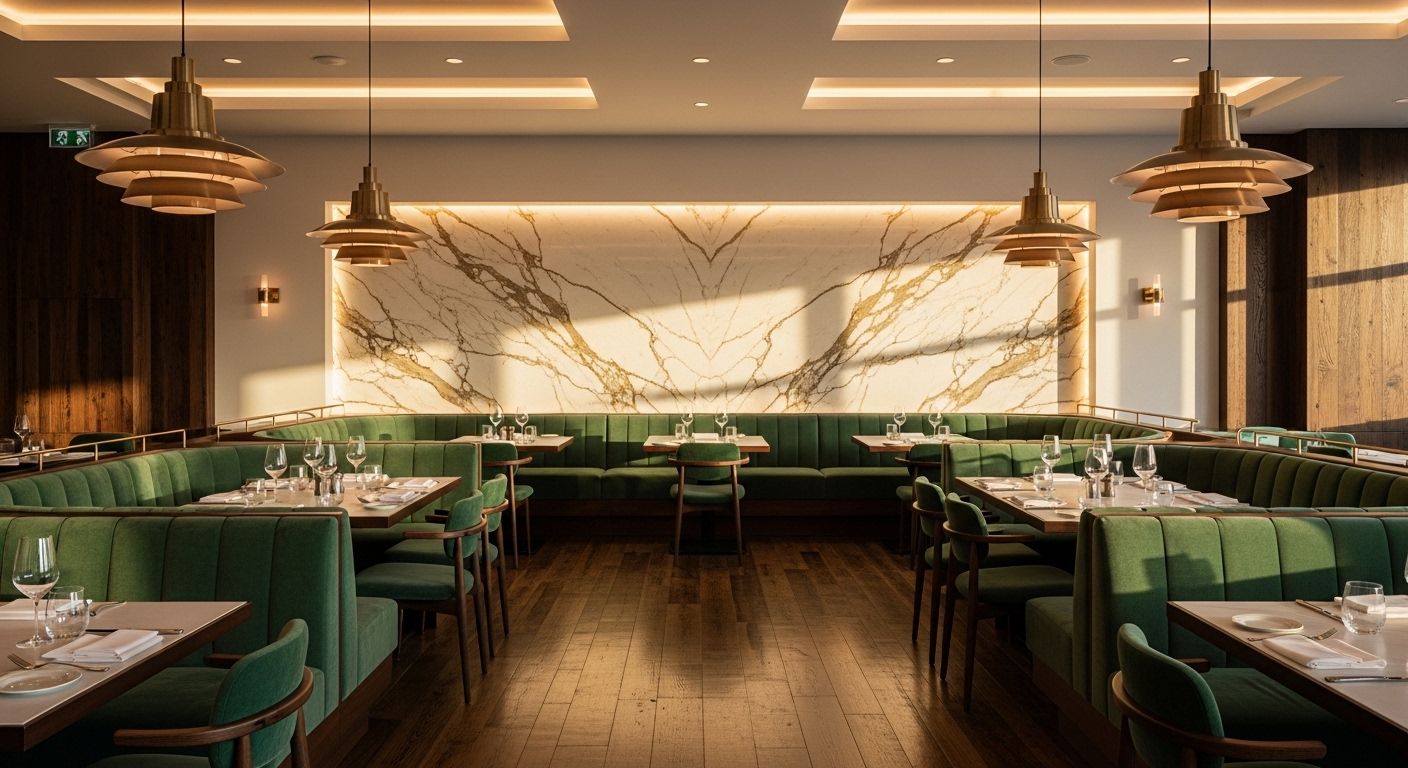
Discover how to blend book-matched Calacatta marble with warm teak and emerald-velvet seating to craft a restaurant interior that glows at golden hour. Learn pro tips for layering ambient light and reflective surfaces to create an unforgettable fine-dining atmosphere.
Home Studios
February 23, 2026
Golden-Hour Marble & Teak: Designing a Luxe Restaurant Dining Room
The first bite a guest takes begins with their eyes, and nothing frames appetite like the warm glow of golden hour light skimming across honed marble and honeyed teak. When designing a luxe restaurant dining room, these two materials—stone’s cool elegance and wood’s organic warmth—create a sensory balance that whispers sophistication without shouting for attention. The goal is a space that feels curated, not decorated; timeless, not trendy.
Setting the Stage: Light as a Material
Golden hour is more than a time of day; it’s a finish applied to every surface. Orient the floorplan so west-facing clerestories or retractable façades invite the sunset to graze Carrara or Calacatta slabs, igniting subtle veining. Complement this with low-glare, 2700 K spots aimed at 30° angles across teak wall slats; the wood’s oils refract the light, amplifying depth. Dimmers on every circuit let servers dial lumens down as twilight fades, keeping the marble luminous without flattening texture.
Material Dialogue: Marble Meets Teak
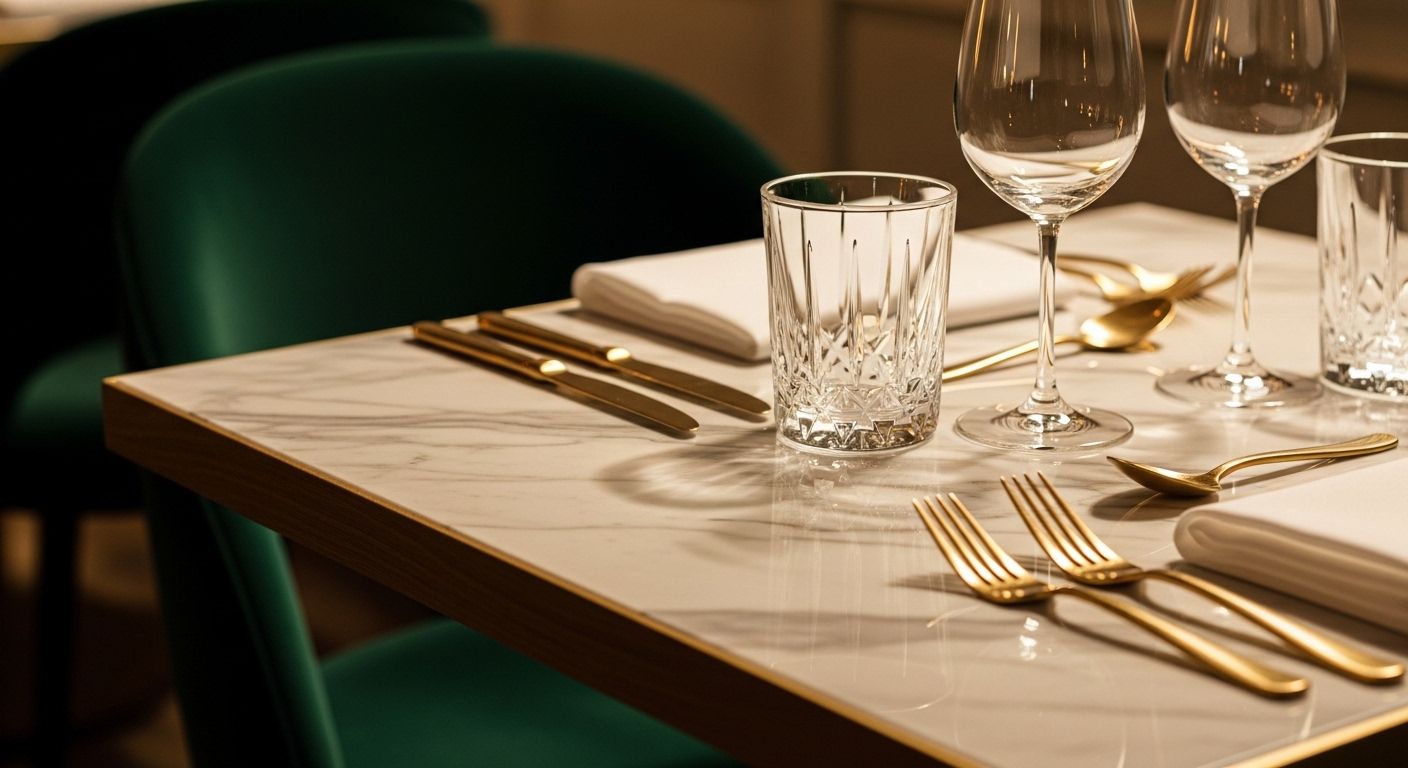
Pair book-matched marble host stands with vertical teak louvers to guide circulation. The stone’s static polish contrasts the wood’s linear grain, cueing guests to pause without physical barriers. Seal teak with a matte, marine-grade oil so it drinks in light while resisting stains; finish marble with a honed, not polished, surface to scatter reflections and prevent glare that competes with stemware. Brass or brushed-bronze fasteners between the two materials act as jewelry—warm metallics echo both palettes and add tactile interest.
Acoustics & Intimacy in Open Plans
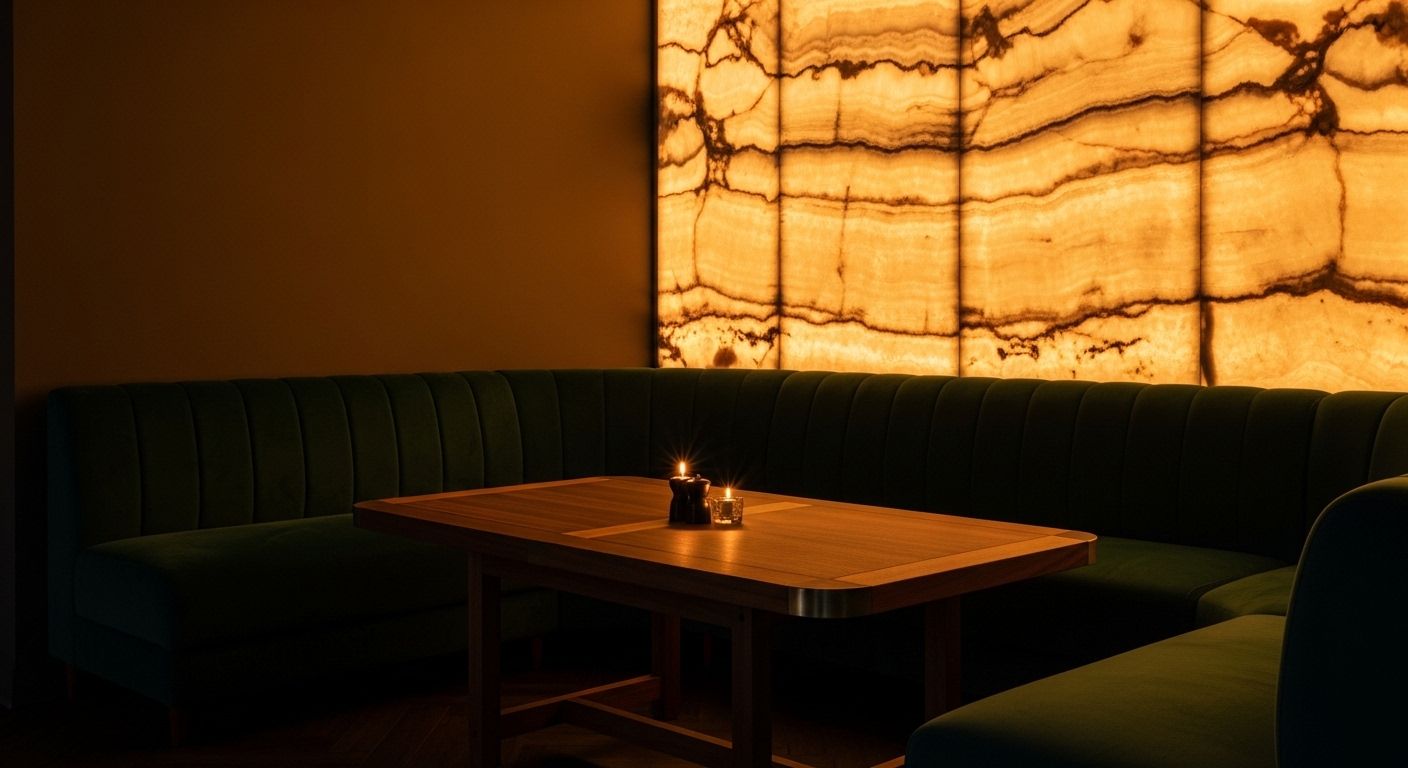
Hard surfaces risk cacophony. Float teak-framed acoustic panels—wrapped in perforated hide or wool—above banquettes to absorb mid-frequencies. Keep panel spacing irregular; the random rhythm diffuses sound like a forest canopy while visually tying to wood wall treatments. Upholster seating in channel-tufted velvet the color of burnt butter; the fabric drinks in light, preventing glare and softening the marble’s visual weight. Result: a 45 dB conversational hush even at 85 % occupancy.
From Design to Experience
Ultimately, marble and teak are merely proxies for memory. When candlelight flickers across a teak edge and a guest’s glass leaves a condensation ring on marble, those imperfections become part of the restaurant’s patina. Specify materials that age gracefully—teak silvering softly, marble etching with ghostly traces of evenings past—so the dining room feels like it has stories before the first reservation arrives. That is the essence of luxury: not opulence, but the confidence of time well spent.