Materials That Define Modern Craft
From poured concrete to hand-finished brass — discover the raw materials that are shaping contemporary interior architecture and craftsman-led design.
Home Studios
February 5, 2026
Every exceptional interior begins with a conversation between materials.
The surfaces we choose — what we walk on, lean against, rest our hands upon — form the sensory foundation of a space. In an era of manufactured perfection, the most compelling interiors are those that celebrate the imperfect beauty of raw, honest materials.
Concrete: The Canvas
Concrete has moved from infrastructure to interior. Today’s most forward-thinking architects use it not as structure alone, but as a design surface — polished to a mirror sheen or left deliberately raw, showing the grain of the formwork.
The appeal is simple: concrete carries time. It develops micro-cracks and patina that tell the story of a building’s life.
Working with Concrete
- Micro-topping — ultra-thin overlays that bring concrete texture to existing surfaces
- Pigmented pours — adding mineral pigments for warm, earthy tones
- Board-formed — pressing wood planks into wet concrete for a textured, organic finish
Brass: The Warm Metal
While chrome and stainless steel defined kitchens and bathrooms for decades, brass has emerged as the metal of choice for designers seeking warmth and character.
Unlacquered brass is particularly prized — it arrives bright and golden, then slowly develops a living patina that deepens with touch and time.
“Brass remembers every hand that has touched it.” — Mila Tanaka, Furniture Designer
Wood: The Anchor
Wood remains the supreme material for grounding a space. But the species and finish matter enormously:
- White Oak — cool-toned, tight grain, extraordinarily durable
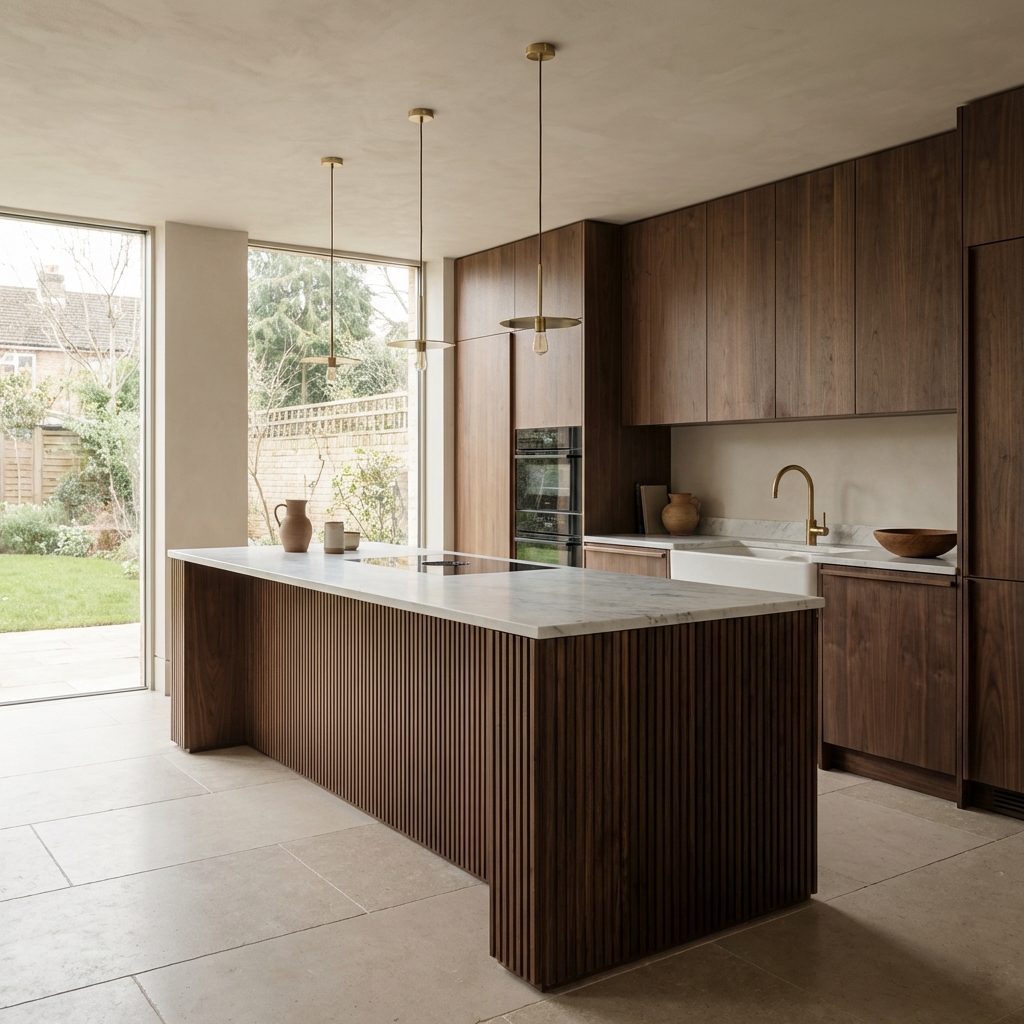
- Walnut — warm, rich, visually dramatic
- Ash — light, subtle grain, excellent for Scandinavian-influenced spaces
- Cedar — aromatic, insect-resistant, ideal for closets and saunas
- Elm — bold, irregular grain, makes every piece unique
The Philosophy of Material Honesty
The modernist principle of truth to materials remains as relevant as ever. When we allow materials to be themselves — unvarnished, unsheathed, visible — interiors develop an authenticity that no amount of decoration can replicate.
The best spaces are not those covered in the most expensive finishes, but those where every surface tells a truthful story about what it is and how it was made.
Browse our furniture archive to discover pieces crafted from these materials, or explore case studies of interiors that celebrate material honesty.