The Quiet Power of Neutral Interiors
Explore why restraint in color creates the most powerful emotional responses in interior spaces. Learn how neutral palettes — from warm whites to soft greys — shape calm, timeless environments.
Home Studios
February 10, 2026
The most expressive rooms are often the quietest.
In a world saturated with bold hues and maximalist statements, there is a growing movement toward interiors that speak in whispers — spaces defined not by what they shout, but by what they withhold.
The Case for Restraint
Neutral interiors are not about absence. They are about intention. When every element in a room exists within a considered palette — warm whites, stone greys, muted beige — the eye is free to notice texture, form, and light.
“Color can overwhelm. Neutrals invite you to stay.” — Erik Nordström, Interior Architect
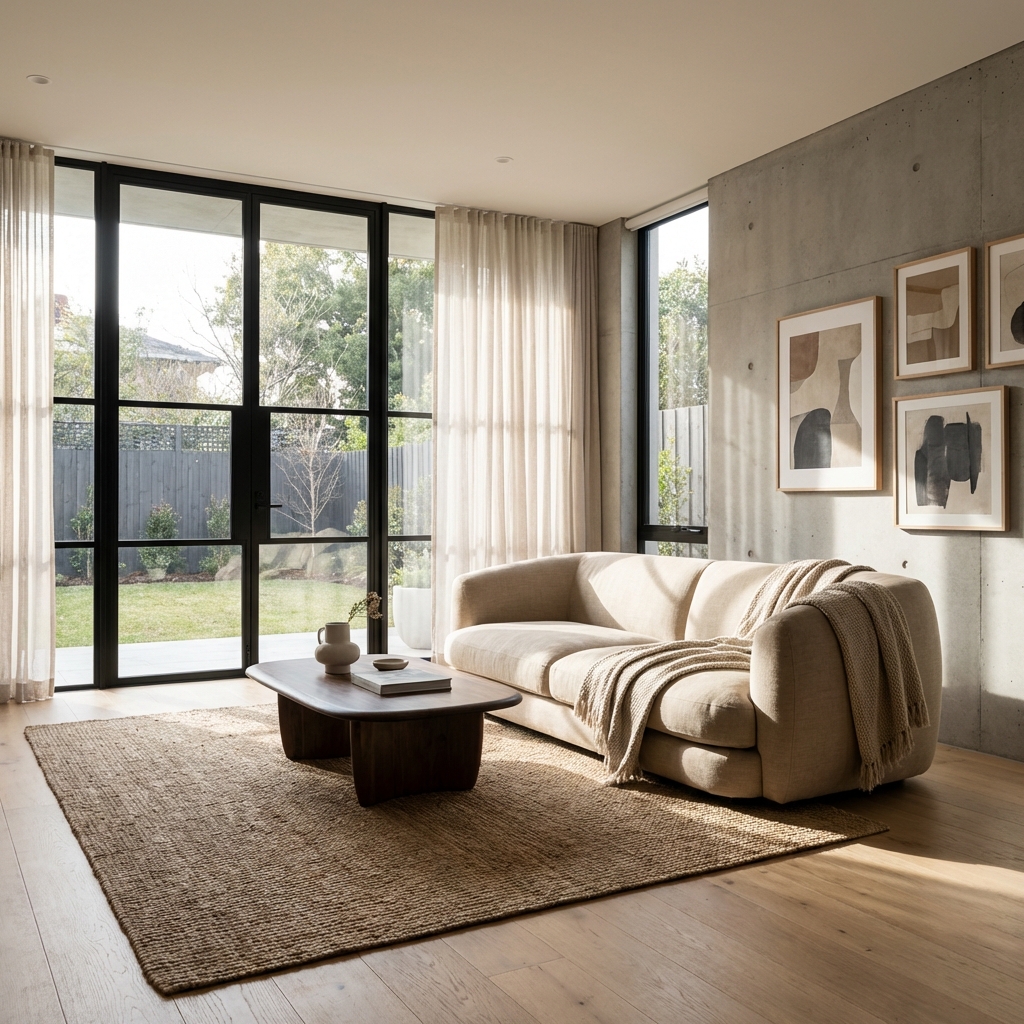
This is the philosophy behind Scandinavian modernism, a tradition that treats the home as a sanctuary rather than a stage. The materials do the talking: raw linen, untreated oak, hand-poured concrete.
How Neutrals Shape Emotion
Research in environmental psychology suggests that muted, warm-toned environments reduce cortisol levels and promote a sense of safety. There’s a reason hospitals and meditation centers lean into soft palettes — they encourage the nervous system to settle.
In the home, this translates to:
- Better sleep — bedrooms with low-contrast, warm neutrals promote deeper rest
- Focused work — studies with muted walls reduce visual distraction
- Calm socializing — living rooms in soft tones encourage longer, more relaxed conversations
The Material Palette
The key to a neutral interior that feels alive rather than sterile lies in material diversity:
- Stone — travertine, limestone, concrete
- Wood — white oak, ash, walnut
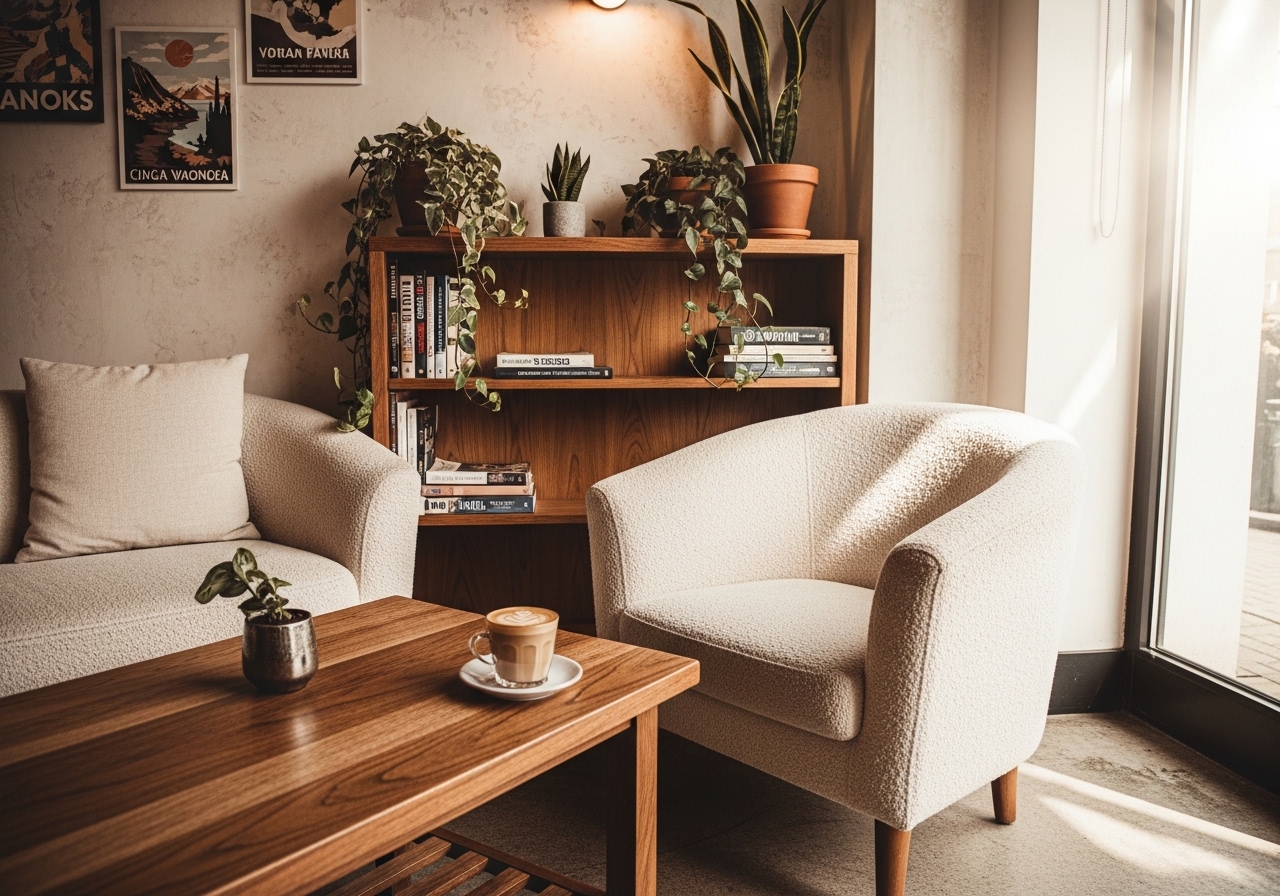
- Textiles — linen, wool bouclé, raw cotton
- Metal — brushed brass, blackened steel
- Glass — ribbed, frosted, hand-blown
When these materials are layered within a neutral framework, the room develops depth and richness that no single color could achieve.
A Room, Not a Palette
The best neutral interiors feel inevitable — as though the space simply is, rather than having been designed. This requires discipline: choosing fewer objects of higher quality, allowing empty wall space, and trusting that silence can be just as powerful as sound.
Explore our curated collection of neutral interiors, or browse the furniture archive for pieces that embody this philosophy.